
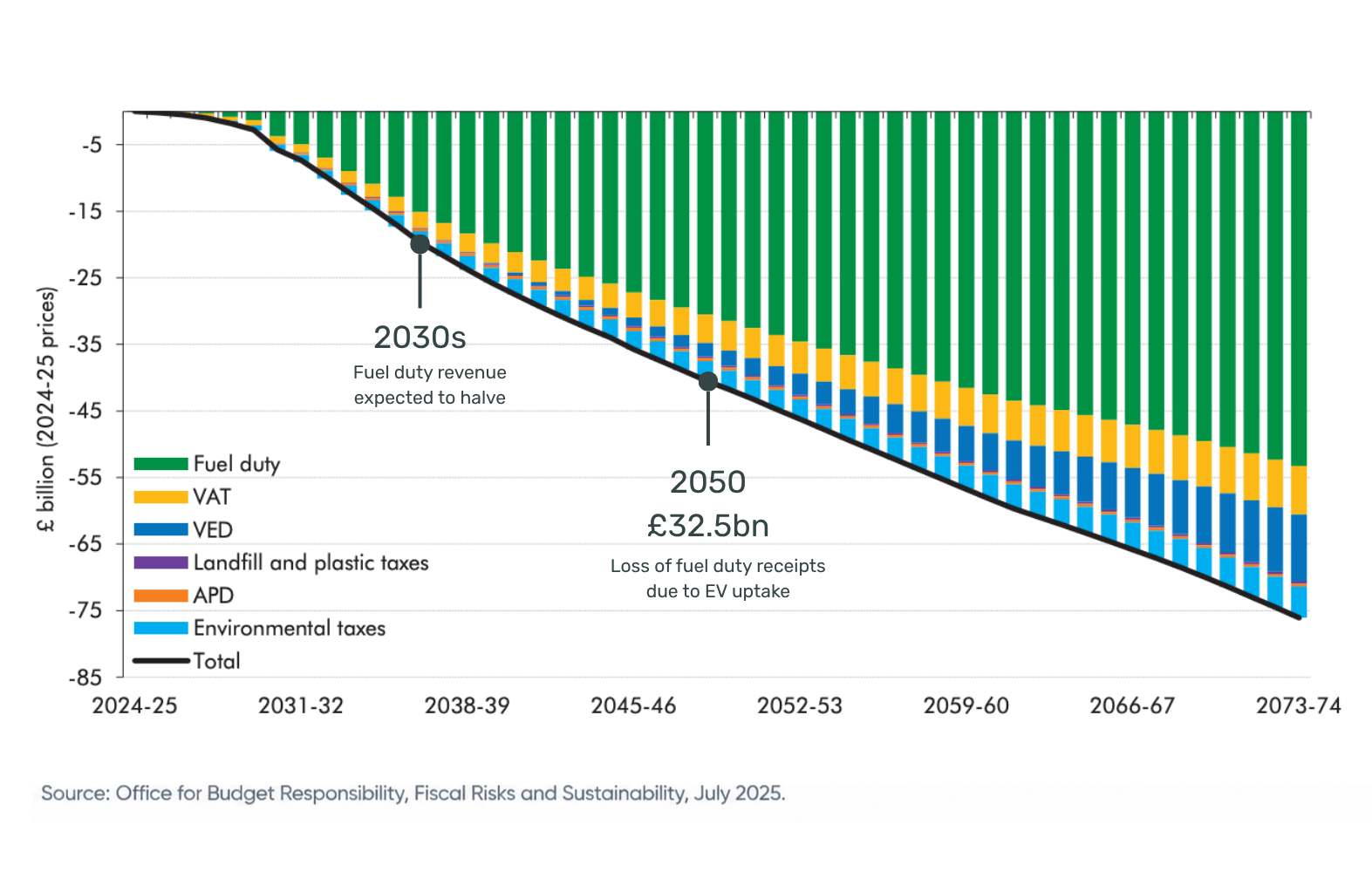



As the vehicle fleet changes, fuel duty revenues are expected to fall sharply. Government will increasingly need to consider how road use is taxed in future, with significant implications for businesses that depend on the road network.
From April 2028, electric cars will pay a new mileage-based charge through Electric Vehicle Excise Duty (eVED). It is expected to raise around £1.4 billion in 2029–30 and £1.9 billion in 2030–31, replacing only a fraction of declining fuel duty revenues.
Further reform is therefore likely. Future changes could have significant cost, compliance and operational implications for commercial road users, making early business involvement essential.
Future changes to road taxation could affect businesses across the economy, from freight and logistics to passenger transport, service fleets and other commercial users.
Poorly designed or fragmented systems could increase costs, create administrative complexity and affect investment, supply chains and competitiveness.
The Road Pricing Coalition brings those businesses together, providing a collective voice while future policy is still being developed.
The road pricing debate covers a wide range of possible approaches, each with different implications for businesses and road users.
The Coalition does not advocate road pricing or promote a particular model. It brings businesses together to examine proposals, contribute evidence and develop shared positions where agreement exists.
Our role is to ensure businesses help shape whatever comes next.

Produce research, briefings, consultation responses and practical evidence on the implications of reform.

Engage ministers, officials, parliamentarians and other decision-makers before proposals become fixed.

Convene member meetings, working groups, roundtables and events across road-dependent sectors.

Use events and communications to ensure the business perspective is heard.